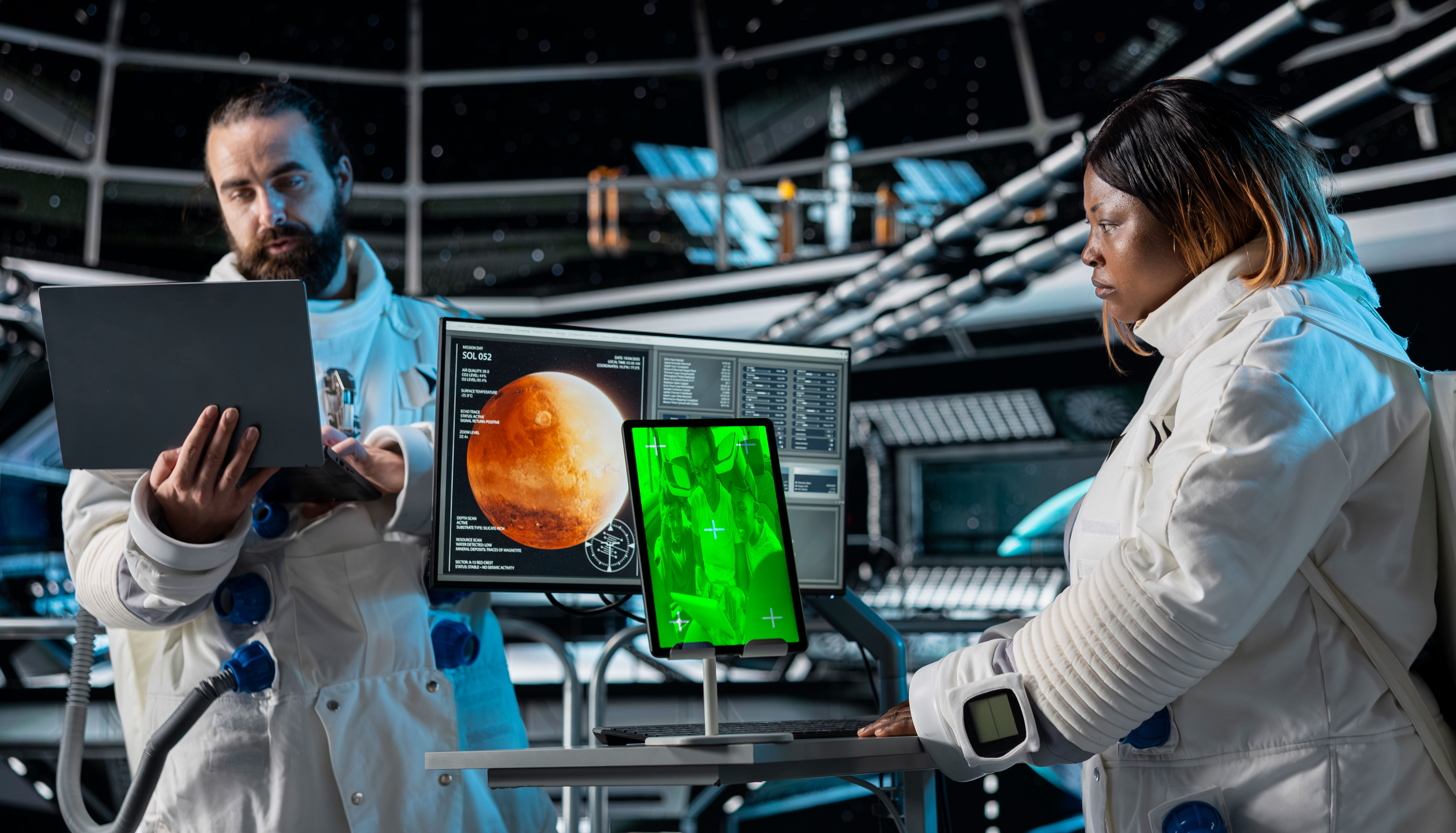
The anticipation of humanity on Mars is fueled by scientific curiosity, technological advancements, and the desire for planetary exploration, with space agencies like NASA and private companies like Virgin & SpaceX leading the charge.
Plans for human missions aim to establish sustainable habitats, conduct research, and explore the planet's surface, marking a new era in space exploration. This endeavor inspires hope for scientific discovery, technological innovation, and the potential for future colonization, reflecting humanity's enduring quest to expand its frontiers beyond Earth.
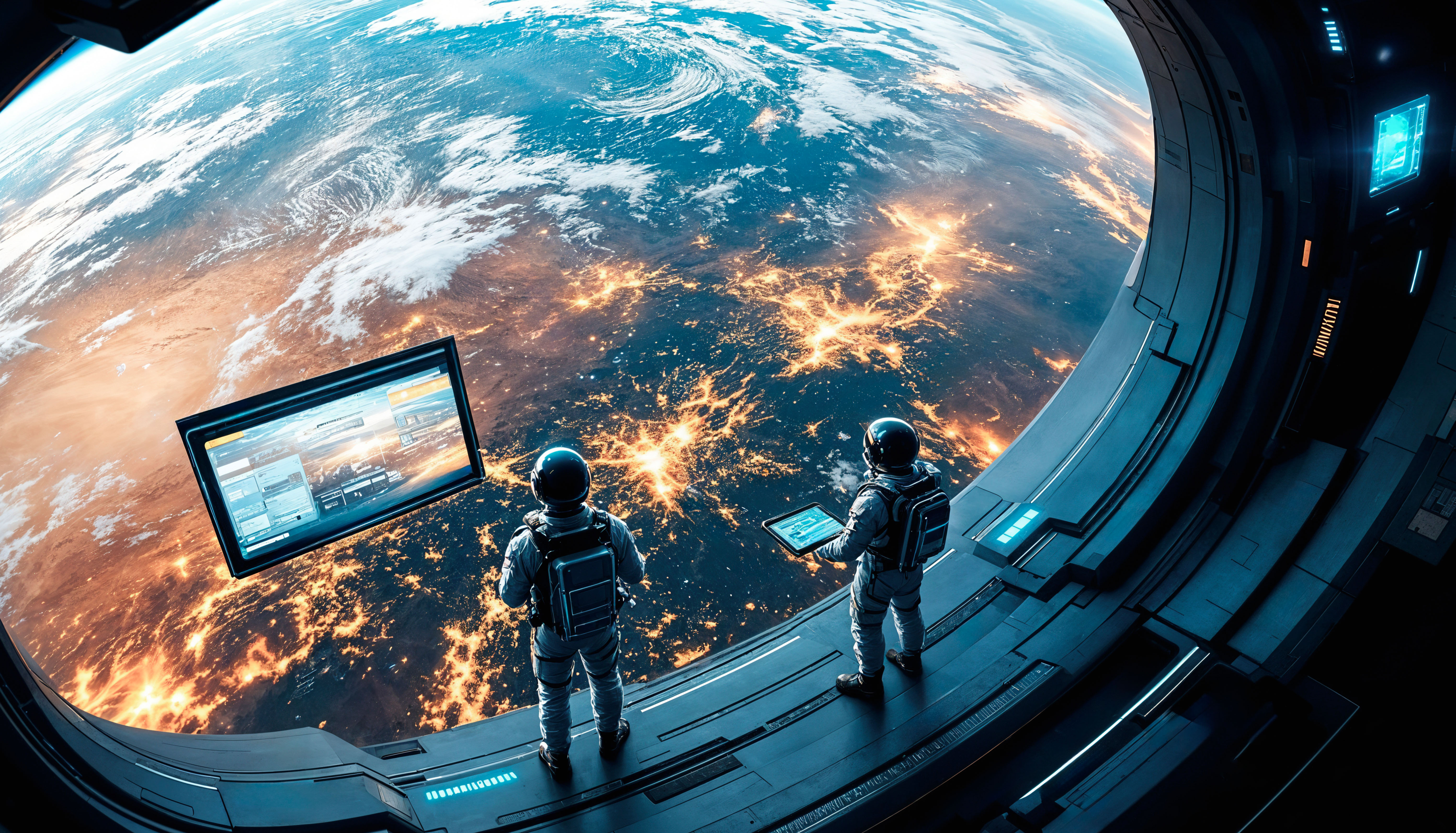
Humanity might survive on Mars better than on Earth by leveraging advanced technologies such as sustainable life support systems, closed-loop water and air recycling, and local resource utilization like in-situ resource mining for water, building materials, and fuel. Developing autonomous robots for construction and maintenance could reduce reliance on Earth supplies, while innovative habitats with radiation shielding would protect inhabitants from space radiation. Additionally, harnessing renewable energy sources like solar power and creating genetically adapted crops could ensure self-sufficiency. These advancements could make Mars a more resilient and sustainable environment than Earth in certain extreme scenarios, enabling long-term human habitation.
Mars is considered more survivable for humanity than the Moon because it offers a more Earth-like environment with a thicker atmosphere, presence of water in the form of ice, and potential for agriculture and resource extraction, which are crucial for long-term sustainability. In contrast, the Moon’s lack of atmosphere, extreme temperature fluctuations, and absence of water make it a harsher environment for human habitation. Mars’s gravity, which is about 38% of Earth's, also provides better conditions for human health compared to the Moon’s very low gravity, reducing bone and muscle loss. These factors make Mars a more viable candidate for establishing a sustainable, long-term human presence.
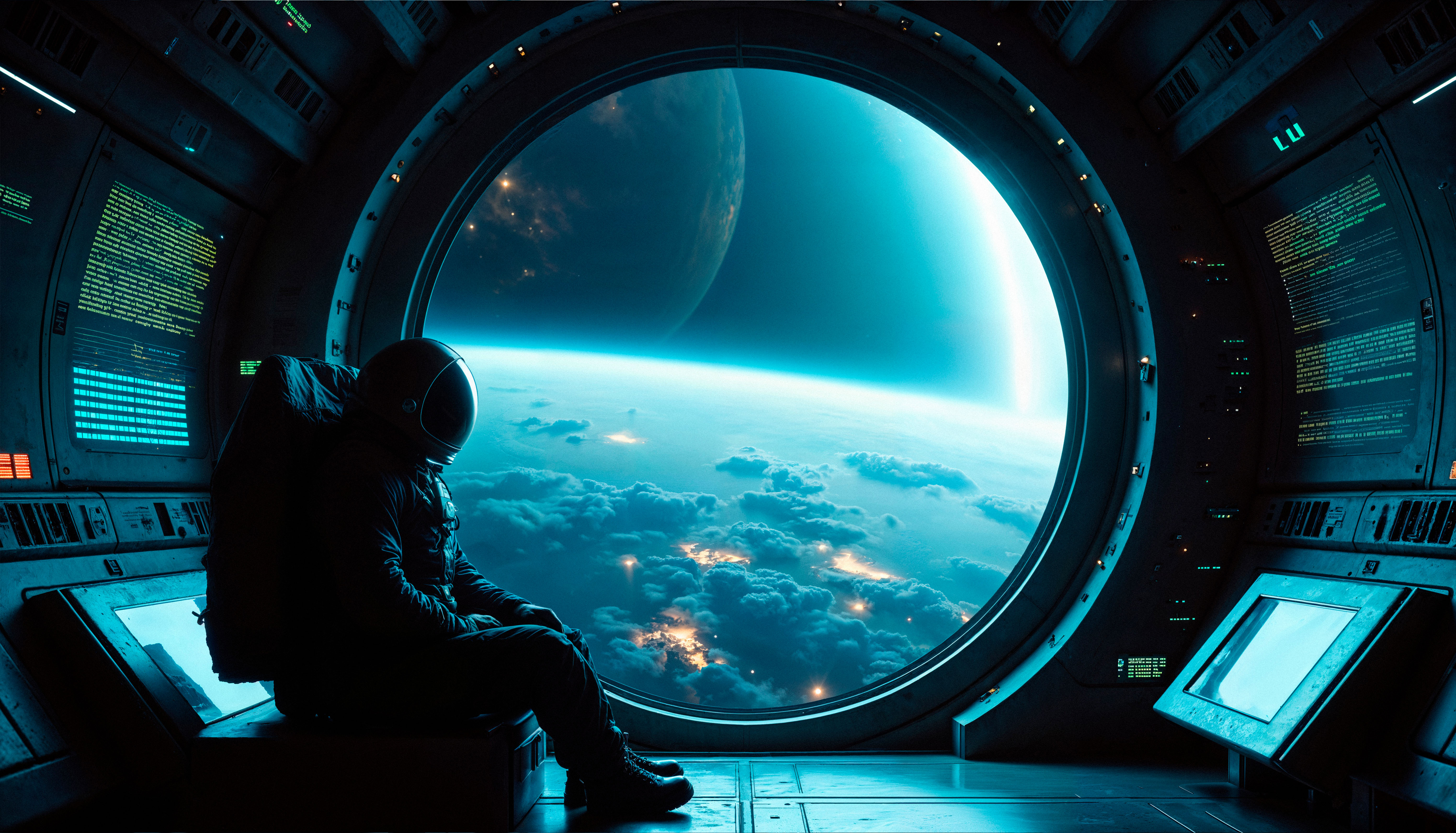
Beyond Mars and the Moon, humanity's future could involve establishing self-sustaining colonies on other celestial bodies such as asteroids, moons of Jupiter and Saturn like Europa and Titan, or even venturing into interstellar space with advanced propulsion technologies. These distant colonies might harness local resources, develop new forms of energy, and create innovative ecosystems to support life far from Earth. Such expansion would push the boundaries of human resilience, technology, and exploration, transforming humanity into a multi-planetary species capable of thriving across the cosmos and ensuring our survival beyond the confines of our solar system.
Humanity's biggest leap beyond the dark is likely to be the development of interstellar travel, enabling us to explore and potentially colonize distant star systems. This leap would involve breakthroughs in propulsion technologies, such as warp drives or faster-than-light travel, and the creation of sustainable life support systems for journeys spanning decades or centuries. Such an expansion beyond our galaxy could unlock new worlds, foster unprecedented scientific discoveries, and ensure the long-term survival of humanity as a multi-planetary, even multi-galactic, civilization, symbolizing our ultimate quest to transcend the darkness of the unknown.